How Wanderhold Works
Wanderhold is a solo narrative RPG. It remembers your character, your world, and every choice you've made.
Eight steps from character to campaign
Pick a World
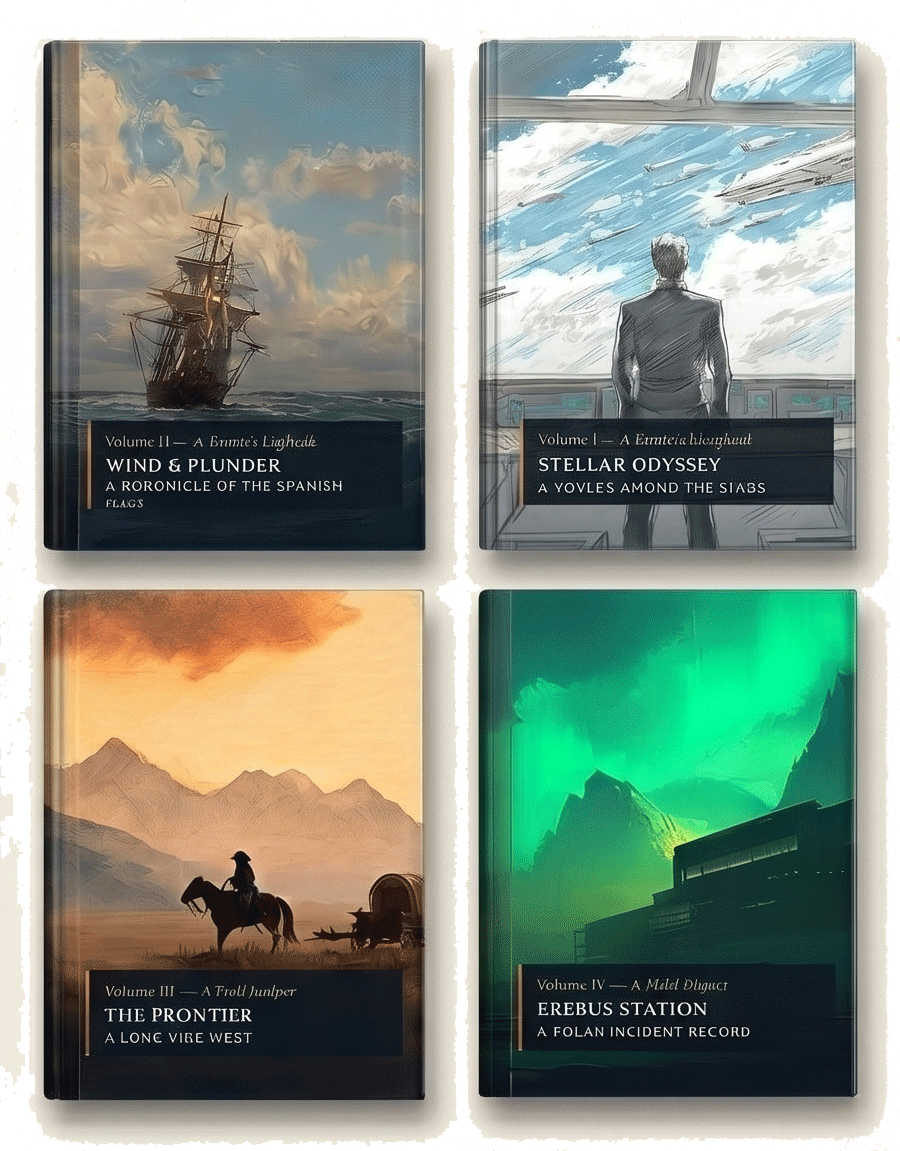
Choose from four hand-built settings: a science fiction style space opera, a historical pirate setting on the high seas, a mysterious research station in the isolated arctic, or lead a gang of outlaws in the wild west. Each world has its own factions, vocabulary, and tone. The narrator and mechanics shift to match.
Create Your Character
Roll up a character that fits the world. Set your attributes, disciplines, values, and beliefs. Write your own backstory, or guide the AI to help draft one based on the choices you've already made. Either way, you stay in control of the final cut.
Configure Your Ship & Crew
Each story has a home base (a vessel, a brigantine, a research station, a ranch) and a crew for you to lead. Crew specialties affect what options appear during play. A cunning quartermaster opens different scenes than a brilliant engineer.
Generate a Mission
The oracle system reads your character, your base, and the campaign so far, then proposes a mission hook tailored to where you are. Every mission has objectives, stakes, and consequences that ripple forward.
Play Through Scenes
Each scene provides three choices tailored to you, your crew, and your setting. Or, describe your own choice in plain language. Then the system will roll 2d20 against your stats. Spend momentum to press an advantage, or let risk rise and watch the story take a turn you didn't plan. The narrator generates the prose, your choices drive the outcomes.
Track Your Campaign
Scenes accumulate into missions; missions accumulate into a campaign. The Story Tracker remembers conflicts you resolved, NPCs you befriended or crossed, and threats that may still be circling. The narrator pulls from that history every time you sit down to play.
Save & Resume Anywhere
Every action auto-saves to the cloud. Close the tab, come back tomorrow, pick up mid-scene from a different device. Your campaign is yours. No daily limits, no session timers, no progress lost to a flaky connection.
Export Your Journal
When a mission ends, export it as a formatted document with character and ship details, mission briefs, act summaries, and a scene-by-scene record of every roll and outcome. Your campaign log is yours to keep, share, or print.
Six rolls. One mission brief.
Before you play a single scene, the oracle builds your brief — mission type, objective, location, incident, and theme. The AI title comes last.
One d20 roll — result seeds every subsequent step.
Objective pulled from the sub-table matching your mission type. 20 options per type.
Detail table is keyed to your location theme — 10 options per theme.
Six rolled strings become the AI’s brief. It writes the title from these seeds.
Better prompts. Better stories.
Good AI writing does not happen automatically. It requires the same discipline as any other software: defined standards, repeatable tests, and a feedback loop that catches regressions before they reach the player. Every prompt change in Wanderhold runs through a full evaluation suite across all worlds — automated gameplay sessions scored against rubrics we built specifically for solo narrative RPG fiction.
Run the loops
Before any prompt update ships, it runs through complete gameplay loops across all worlds. Every scene, every roll, every narrative beat — automated from start to finish.
Score what comes out
Each session is scored on writing quality, structural coherence, and whether story promises made in Act 1 pay off in Act 3. When a planted detail never surfaces again, the system catches it.
Fix it at the source
Scores feed directly back into the prompts. When we found late scenes ending in deliberation instead of action, we traced it to the prompt architecture and fixed it there.
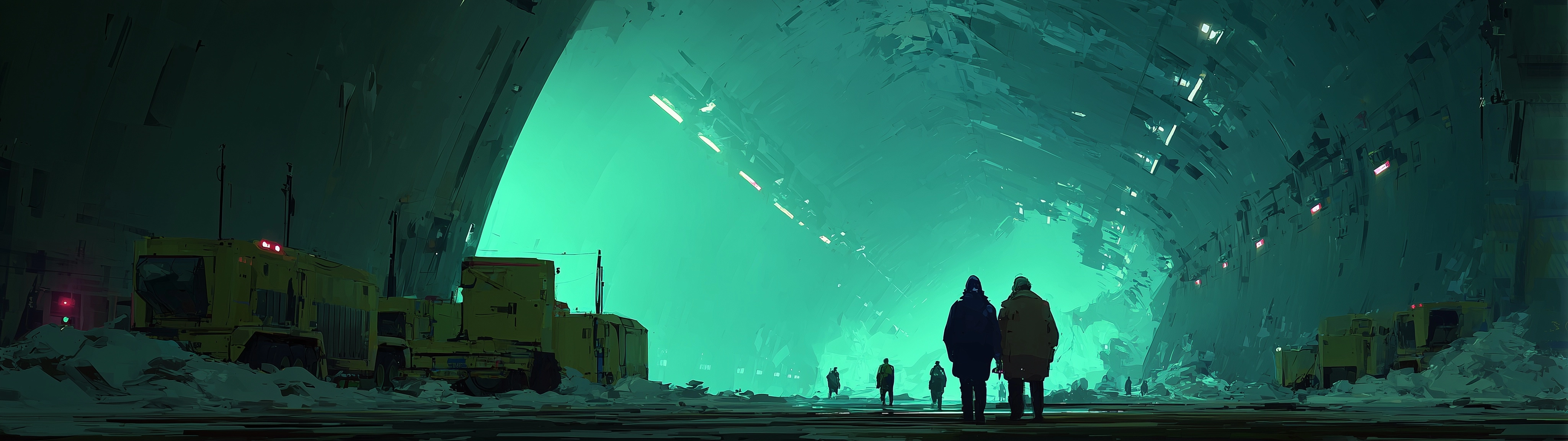
Two fingers pressed briefly to the patch pocket over his sternum, where he keeps a photograph folded to the size of a playing card. He doesn't reach for it consciously. It's just what Kael does when something is wrong and he needs to remember what he is protecting.Erebus Station — automated session run, May 2026
The first layer is textual heuristics run directly on the prose: vocabulary variety (how many distinct words a session uses relative to total words), embodiment density (how physical and sensory the writing is), and sentence-length variance (whether the narrator has rhythm or has flattened into a monotonous cadence). These run without AI and catch mechanical problems fast.
The second layer uses Claude itself as a reviewer. We built a library of rubric prompts that ask structured questions about each scene: does it open with a concrete, specific detail unique to this moment? Does the player's choice meaningfully change what happens next? Does the scene close with a real state change, or does it end in a question that defers resolution? Each check returns a pass, fail, and a reason.
| # | Beat | Attr | Clr | Ctx | Ch | OpCh | TTR |
|---|---|---|---|---|---|---|---|
| 1 | you-need | pres+cmd | P | P | P | P | 0.616 |
| 2 | you-need | dar+helm | P | P | P | P | 0.675 |
| 3 | go | reas+sci | P | P | P | F | 0.598 |
| 4 | go | pres+cmd | P | P | P | P | 0.641 |
| 5 | search | reas+sci | F | P | P | P | 0.612 |
| 6 | search | ctrl+eng | P | P | P | P | 0.589 |
| ··· 9 more scenes | |||||||
The third layer tracks narrative structure across the full session using the HANNA framework: relevance, coherence, empathy, surprise, engagement, and complexity scored per session. On top of that, we track promise closure — whether a detail or tension threaded into Act 1 is honored by Act 3 — and beat fidelity, which measures whether each scene hits the structural moment it's supposed to hit rather than deferring it to the next scene.
What the AI does and doesn't do
The AI is the narrator, and it is fed a constant stream of information created just for you. It generates scene prose, voices NPCs, and tracks the world's state. It does not decide whether you succeed at an action. That's your character sheet and the dice. It does not invent rules on the fly. It does not forget what you did three missions ago. The game runs on real RPG mechanics underneath; the AI is the storyteller riding on top.
Common questions
More questions? See the full FAQ or view pricing.
Ready to play your first scene?
No group to coordinate. No prep work. The campaign starts the moment you confirm your character.
Start Playing FreeNo credit card required.